- Name
- Riverine combat
- Release or access
- Both sides
- Battlefield purpose
- Armed patrol boats and water movement
- Source
- Official product and Steam descriptions
- Current build
- 13 August 2026
Current build
A river is not empty space
A waterway changes the relationship between movement and observation. A boat can carry pressure along a route that would otherwise be a boundary. Swimming can open a crossing, but it also changes how long a player is exposed and what support the squad can provide. Climbing can turn the bank into a usable edge. The useful callout therefore names the water and the bank together: river crossing, boat lane, dock edge or bank fallback.
The map records make those surfaces concrete. Thanh Hóa Bridge centers a bridge and river crossing. Vạn Tường uses a river network and boats. Huế Outskirts includes waterways, Quảng Ngãi includes flooding, and Cam Ranh Port adds docks and logistics space. Riverine combat is strongest when the squad reads the map record before deciding that every water route should be crossed.
Field note
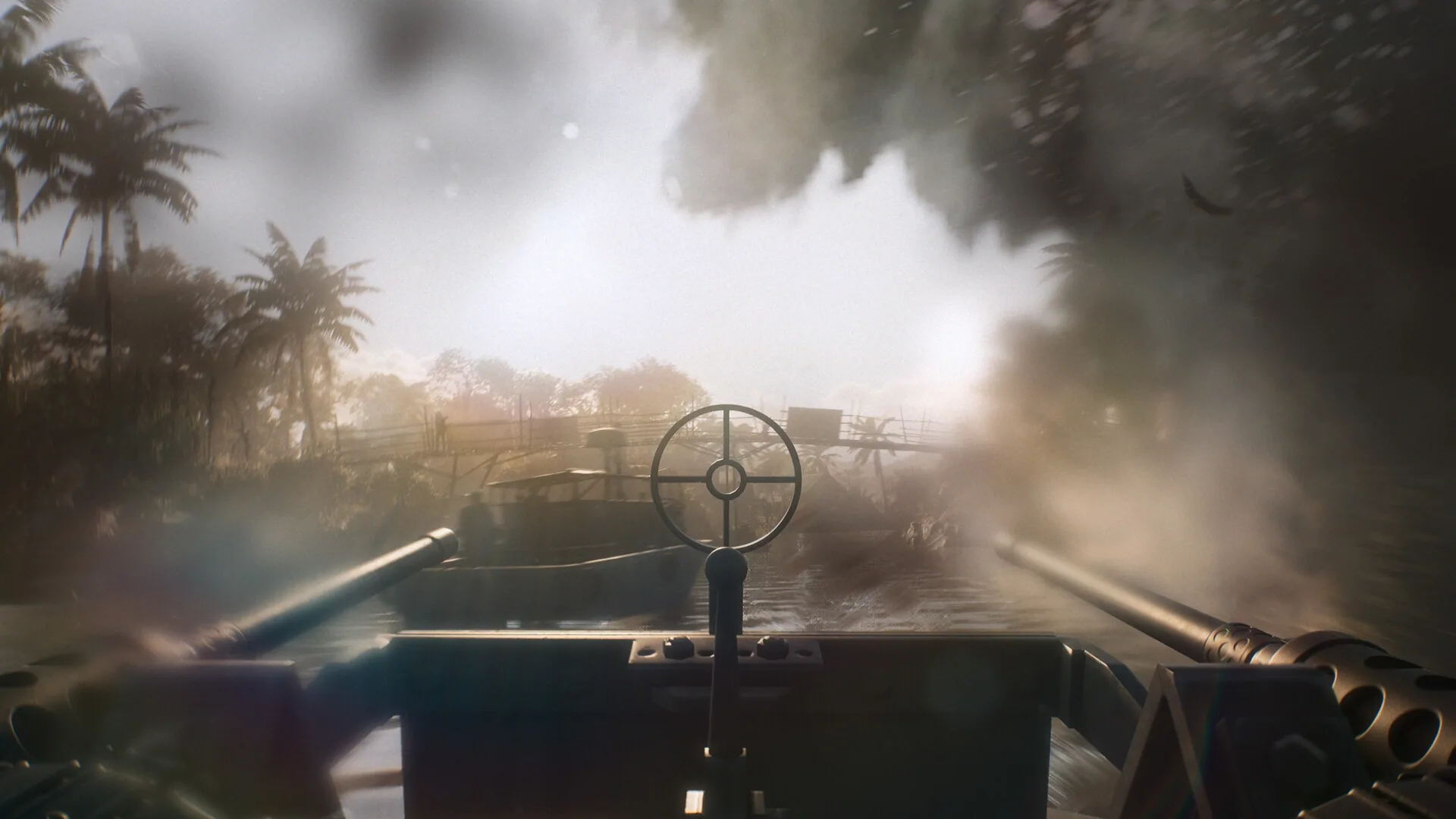
Patrol boats create a moving problem
The vehicle record describes heavily armed patrol boats on both sides, with a function of riverine combat and waterway skirmishes. That makes a boat a tactical surface, not just transport. Recon can report movement, Command can connect it to the sector task, and Infantry can decide whether to wait for cover, take another bank or use a different route. A boat sighting is valuable because it updates the map’s timing.
Do not separate the boat from the squad task. If the objective is a crossing, say which bank needs to be reached. If the objective is a dock, say which route keeps logistics moving. If the boat blocks the expected approach, update the fallback. The record gives the vehicle identity; communication gives it a useful place in the match.
Field note
Waterway routine for a first match
Before a crossing, name the visible edge, the alternate route and the support that could change the timing. US Forces may connect a helicopter request to an air-and-ground opening; the NVA may connect a tunnel network to a fallback or hidden approach. Both sides can use boats and water movement, so the common discipline is to report what the water is doing before asking the squad to enter it.
Use Vehicles for the short record, Battlefields for the six terrain contexts and Battle doctrine for the order of decisions. Riverine combat becomes manageable when the player stops asking whether water is safe in the abstract and starts asking what the river is doing to this route, at this time, for this squad.