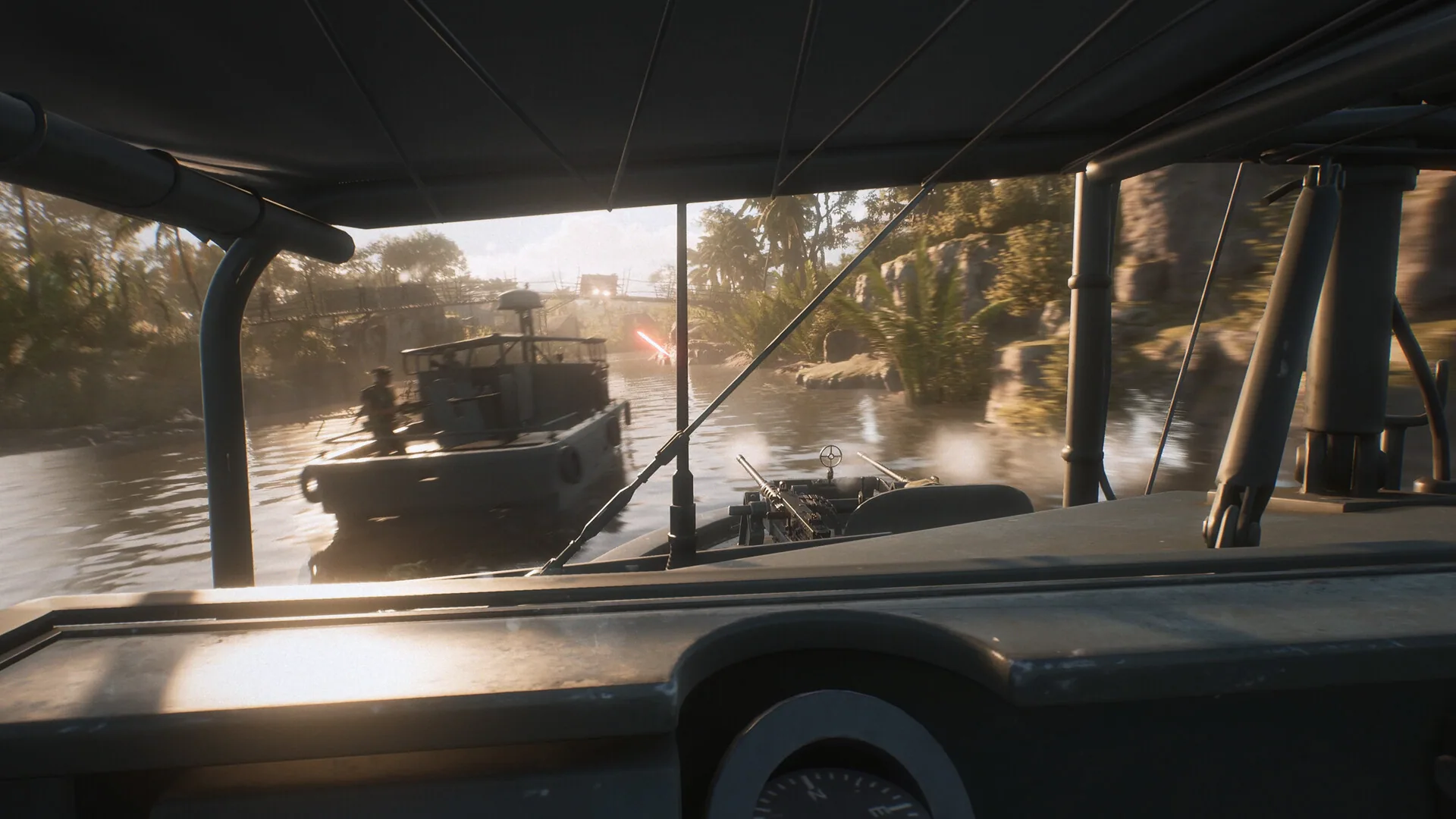
- Name
- US helicopter operations
- Release or access
- US Forces
- Battlefield purpose
- Aerial fire support and supply drops
- Source
- Official product and Steam descriptions
- Current build
- 13 August 2026
Current build
Connect the sky to a ground task
Aerial fire support has a job only when the ground team can use the opening. A squad should name the sector, route or pressure point and state what it will do after the action. Supply drops need the same connection: identify the position or fallback that benefits, then report whether the drop changed movement. This keeps the helicopter surface inside command and squad teamwork instead of making it a separate visual layer.
The role split clarifies the connection. Logistics Officer is the helicopter logistics surface; Pilot is the helicopter operation surface. Commander and Squad Leader translate the wider plan into a request, while Infantry, Recon, Armour and Mortar Squad use the changed ground. The system works through coordination, not through a single role acting alone.
Field note
Read the map before the request
Open terrain makes timing visible. Đắk Tô Airfield has long runway sightlines and open ground. Thanh Hóa Bridge turns support into a bridge or river-crossing question. Cam Ranh Port has docks, dunes and logistics space. Huế Outskirts and Vạn Tường connect water and built surfaces, while Quảng Ngãi adds cliffs, caves, flooding and bamboo. A request should refer to one of these surfaces so the pilot and ground squad share the same problem.
The faction comparison matters here. US Forces have the helicopter support surface; the NVA has buildable tunnel networks. The difference is not a reason to ignore shared roles. It is a reason to understand what each side can ask the map to do. The best US call makes the air action legible to the players who must move through its result.
Field note
Keep the air surface disciplined
Avoid a general request when a concrete one is available. State the target area, the current route and the action that follows. If the request is no longer useful, cancel or update it so the team does not move toward an old plan. If the support draws attention instead of opening the lane, treat that change as information and give the squad a new fallback.
New players can learn the system from the ground. Take a shared role, listen for a helicopter request and report whether it changed the terrain. Then open Vehicles for the operational helicopter record, Roles for the US-only slots and Battle doctrine for the sequence that turns air support into a sector decision.
Field note
Translate air into ground time
The value of a helicopter action is measured by what the ground team can do during the change. A fire-support request may create a short opening, a supply drop may keep a route active and a visible flight may draw attention away from another lane. State the intended ground action before the request, then report whether the opening existed. This gives the Pilot and Logistics Officer a useful response and lets the Squad Leader update the plan rather than waiting for a perfect result.
The system belongs to the US Forces surface but still depends on the common roster. Recon identifies the approach, Infantry occupies it, Armour tests the pressure and Medic keeps the movement from becoming an abandoned casualty. Read the vehicle record for the short operational entry and the role record for the two US-only seats.
The cleanest practice loop is small: name one ground task, make one support request, observe one route change and report the result. A player does not need a catalogue of aircraft specifications to learn that loop. The captured record supports the roles, the support effects and the relationship to terrain; the map and squad call supply the rest of the practical context.