Current build
Two sides, one 50v50 surface
US Forces and the NVA enter the launch build as distinct sides rather than cosmetic labels. Both sides use the chain of command, squads and a large team objective, but their signature support surfaces are different. US Forces are connected to operational helicopters, aerial fire support and supply drops. The NVA is connected to buildable tunnel networks. That asymmetry affects the questions a Squad Leader asks: where does support arrive from, where can a fallback be built, and which route is safer when the ground is cut by a river or exposed by a runway?
The role roster reinforces the split without turning every role into a faction-only class. Commander, Infantry, Recon, Armour and Mortar Squad records are listed for both sides in the current Steam surface. Logistics Officer and Pilot are US-only and sit inside helicopter operations. Players can therefore learn the common squad language on either side before learning the support system that makes a faction feel different.
Field note
The tactical asymmetry
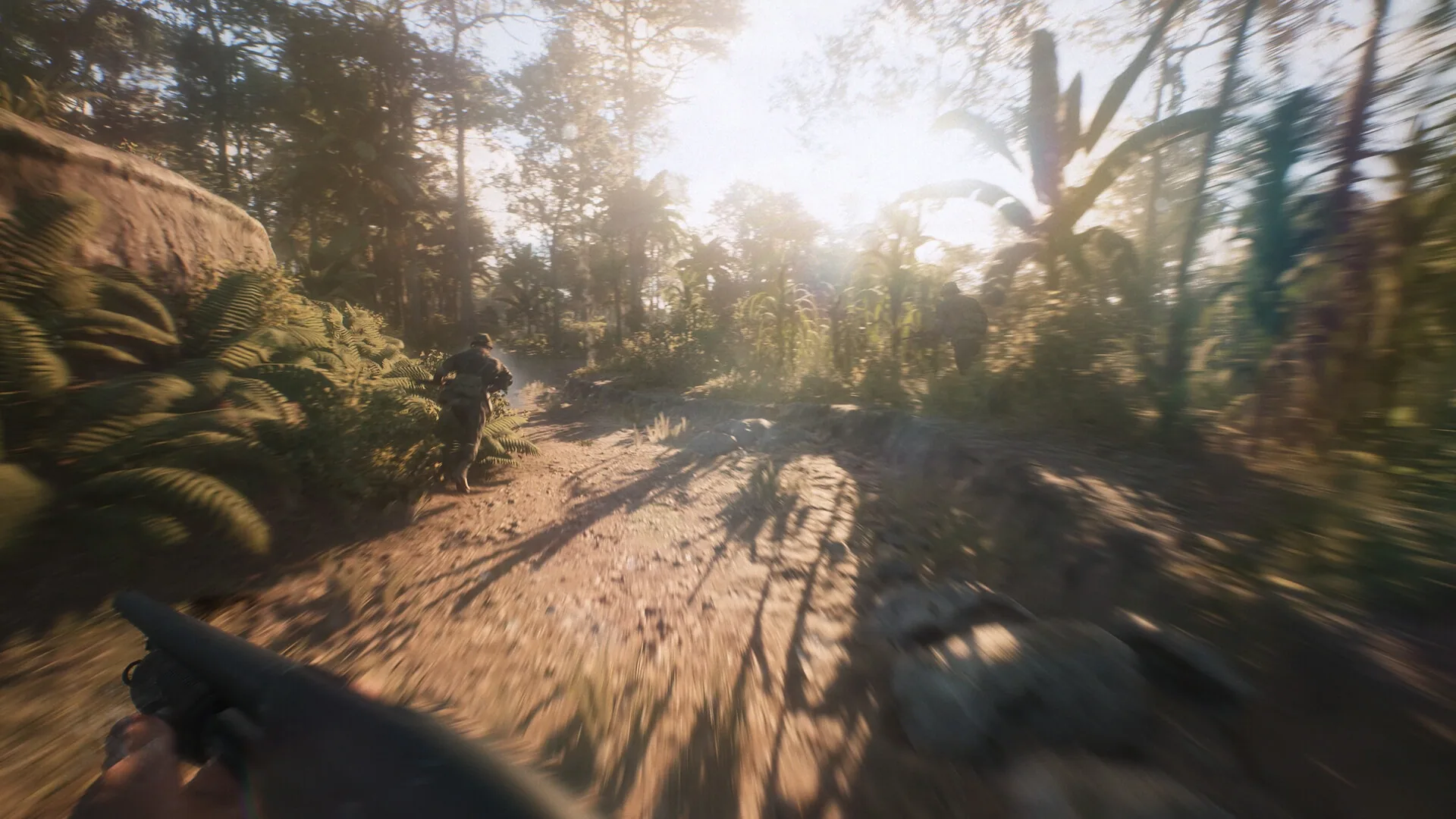
Helicopters create a visible connection between air and ground. A US squad can frame a request around fire support or a supply drop, and the helicopter roles have a defined relationship to that request. The support is not a replacement for infantry movement; it is a way to change the timing and pressure around a route. Open ground, runway sightlines, docks and crossings make that timing especially important because a supply or fire-support decision can determine whether a squad reaches its next piece of cover.
Tunnel networks give the NVA a different support surface. A buildable network can anchor a plan below the obvious route and make a flank, defense or recovery line more difficult to read from the surface. The useful comparison is not air versus underground as a power ranking. It is air and supply timing versus hidden network placement. Both systems still depend on command, squad communication and a player who can name the ground they want to influence.
Surface
Field note
Choosing a side as a new player
Choose US Forces when the helicopter surface, aerial support and supply drops are the part of the launch build you want to learn first. Choose the NVA when tunnel-network construction and a less visible support line are more interesting. Neither choice removes the need to understand Squad Leader, Rifleman, Medic, Engineer or the other shared roles. A player who can move with a squad and report a concrete terrain change will contribute on either side before mastering the signature system.
The battlefield list helps make the choice concrete. A river crossing at Thanh Hóa Bridge, open runway ground at Đắk Tô Airfield, and a dock or boat route at Cam Ranh Port each expose the faction systems in a different way. Start with the side page, then visit Systems for the underlying mechanic and Battle doctrine for the decision sequence. The goal is a useful first match, not a permanent identity claim.
Before readying, say which support surface you want to practice and which shared role will keep the squad moving. A US player can listen for the air request without taking a helicopter seat; an NVA player can learn tunnel placement while serving as Rifleman, Medic or Squad Leader. That keeps faction learning connected to the 50v50 task and gives the first match a concrete observation to bring back to the next deployment.